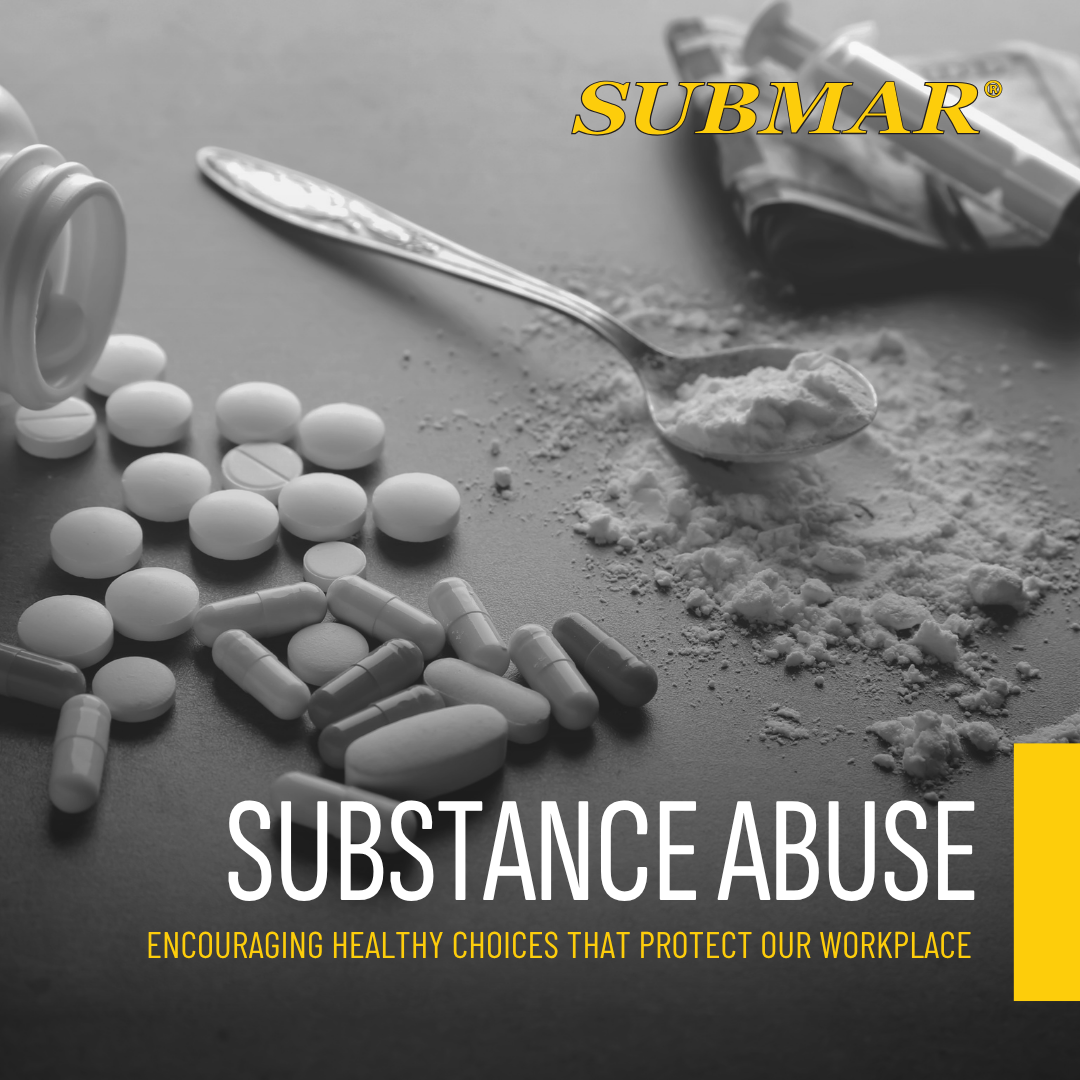
Workplace safety goes beyond physical hazards. Awareness, prevention, and support are key to addressing substance misuse and protecting the health and wellbeing of every employee.
Safety Topic: Workplace Substance Abuse
August 2026 – Safety Topic – Workplace Substance Abuse
Workplace Substance Abuse
Substance use negatively affects U.S. industry through lost productivity, workplace accidents and injuries, worker absenteeism, low morale, and increased illness. U.S. companies lose billions of dollars annually due to worker alcohol and drug use and related problems.1 Among working adults, 8.7% had a substance use disorder (SUD) within the prior year. This includes 6.9% who had an alcohol use disorder, 1.5% with a cannabis use disorder, and 0.7% with a pain medication or opioid/heroin use disorder.i Nearly a third (31.5%) of working adults binge drank alcohol at least once in the prior 30 days.
Recommendations for Employers: Focus on Prevention
Workplace alcohol and drug policies are essential to workplace safety. Many companies require drug testing before hiring, perform random drug testing during employment and have clear consequences for violating established policies. A majority of employers (84%) conduct drug testing on job candidates, according to the 2019 NSC Opioids at Work Employer Survey.v In addition to the value of meeting legal requirements and reducing liability risks, good workplace policies can help employers reduce unplanned absenteeism, excess health care costs, turnover and reduced productivity associated with substance use in the workforce. The National Safety Council Opioids at Work Employer Toolkit has several resources on this topic, and the Substance Abuse and Mental Health Services Administration (SAMHSA) Drug-Free Workplace Toolkit is a good source for information on drug-free workplace policies and programs.
1. Ensure Workforce Can Recognize Signs and Symptoms
Early workplace warning signs of workers with an alcohol or substance use disorder can be seen in individual employees and also in workplace trends.
For Individuals
Impairment can manifest in different ways. Sometimes, there may be physical signs and symptoms. Other times, it can manifest as a behavior pattern or change that is concerning. These signs, symptoms and behavior changes do not necessarily mean that someone is impaired or has a substance use disorder; however, they can be cause for concern.
Here are some common signs that could indicate impairment or substance misuse. Remember, these are signs and symptoms that can be caused by more than one situation. Avoid jumping to conclusions about why someone is acting differently. Follow the policies and procedures in place to ensure fair, consistent handling of potential impairment in the workplace.
Common signs and symptoms can include but are not limited to:
- A rapid shift in physical appearance, tremors, unsteady gait, loss in manual dexterity, working in an unsafe manner, or the odor of alcohol or other drugs
- Concerning or changing behavior patterns such as inappropriate verbal or emotional responses or behaviors, unusual irritability, memory lapses, unusual isolation from colleagues, lack of concentration, confusion, forgetfulness, or lying
- Job performance changes including calling in sick frequently, unexplained tardiness, early departure, extended breaks, errors in judgment, deterioration in performance and quality of work, or testing positive on a drug screen
In the Workplace
These impacts can also be seen when looking at the workplace and workforce as a whole. Employers may see:
- Frequent turnover
- Declining productivity
- Frequent workers’ compensation claims
- Increased rates of positive drug screens.
2. Support and Train Supervisors and Managers
Supervisors play a critical role in addressing opioids in the workplace. They are often the first to notice a difference in an employee’s performance, personality and activities, and they may be the first to notice impairment. It is imperative to provide them with the tools they need to protect the safety of the workplace, the privacy of employees, and to help them help others.
Supervisors should be trained on the following:
- The organization’s Drug-Free Workplace Policy (DFWP) and how it relates to impairment
- Communicating with employees about impairment, the DFWP and where they can go for more information
- Understanding substance use disorders (SUDs) and their potential relationship to impairment
- Recognizing symptoms of impairment and how to respond in an impairmentrelated crisis
- Drug testing procedures and other testing procedures related to impairment; consequences of noncompliance with testing procedures
- Required procedures and documentation when workplace impairment is observed
- Knowledge of appropriate resources to offer employees who need to address problematic substance use as well as stressors that can cause impairment, such as family, financial, education/training, performance demands, etc.
- Using “person-first” language in the workplace, such as “person with a substance use disorder” instead of alcoholic, addict or drug abuse
3. Provide Other Support Programs
Employee Assistance Programs (EAPs) are important, supportive tools to make available to all workers, particularly workers who might be struggling with substance use issues. Most EAPs provide 24-hour/7-day hotline counseling services, either in person or by phone or computer. They provide counseling to help workers cope with problems interfering with work or home life. Many also offer coaching and training for managers, and provide crisis support to help workers and teams cope with the physical and psychological symptoms caused by critical incidents or trauma.
All EAPs should guarantee confidentiality, assuring workers of secure and private assistance that helps address their work-related and personal issues. Selecting a high-quality EAP is critical to supporting workers with substance use disorders. A good EAP Substance Use: Prevention, Screening Tools and Workplace Policies should provide barrier-free preventive services, screening and early identification services, short-term counseling, referral to specialty treatment, and other behavioral health interventions related to opioid use and misuse.
Worker Peer Support Programs have also been particularly helpful in addressing these issues. In these programs, workers who have experienced substance use or mental health challenges and learned to manage them are formally trained to help co-workers who are facing similar issues. Peers let their co-workers know they are not alone in dealing with substance use and mental health problems and encourage them to take advantage of counseling, either through an EAP or otherwise. Workers are encouraged to talk to their co-workers before personal issues cascade out of control. It is not meant to replace professional medical and treatment services but instead serves as an extra support system for those who are struggling.
4. Screening Tools for Assessing Possible Alcohol and Substance Use Problems
Screening tools increase the rate of identification of risky and unhealthy alcohol and drug use, and can link people to appropriate treatment earlier. EAPs, onsite health programs and medical providers should learn and use appropriate screening tools. Workplaces should ensure that their EAP and benefits programs use screenings when substance use is suspected and encourage screening upon opioid prescription for familial or individual history of addiction or substance use disorders.
5. Workplace Policies
Companies should establish clear policies around substance use. Workplace drug policies should be clear about the use, possession or sale of drugs on company premises, and control the consumption of alcohol and other drugs during work hours. Some companies are legally required to have workplace drug policies. Employers should focus on four key policy areas when working to prevent substance misuse in the workplace:
- Providing employee education focuses on substance use, opioids, opioid misuse and overdose
- Supporting a workplace culture that values holistic employer health and wellbeing
- Ensuring that benefits and health care plan coverage includes preventative services, as well as treatment for SUD and OUD
- Developing a robust, clear Drug-Free Workplace Program (DFWP)
Drug-Free Workplace Programs (DFWPs) protect both employers and employees from harm. These programs should include prevention, detection and treatment components that align with the organization’s chosen policy. The program should include the following elements:
- Clear, precise written policies and procedures that define employee and employer responsibilities
- Education and resources for employees and supervisors
- Drug testing guidelines
- Effective employee benefits such as health care coverage, employee assistance programs and flexible sick time/PTO
- Mechanisms for directing employees into treatment and re-integrating employees in recovery
DFWPs should be customized to fit the individual circumstances of the workplace. Workplaces are subject to a variety of legal and safety regulations on federal, state and municipal levels. Programs should also reflect the values and characteristics of the workplace.
Benefits of Well-Communicated Workplace Alcohol and Drug Programs and Policies:
Employers will be more successful in reducing opioid-related issues if employees actively support a policy – not simply understand and accept it. Consistent education is critical to gaining employee buy-in. A well-communicated plan with strong employee buy-in can support:
- Safer environments for workers
- Increased morale
- Decreased workplace accidents
- Reduced worker theft
- Increased productivity
- Reduced worker turnover
- Decreased cost of insurance, such as workers’ compensation
Prevention of substance use, substance use disorder and overdose is complex, as there are many root causes and risk factors for addiction. Employers can help prevent substance misuse and the development of substance use disorders in several ways. While employers cannot address all of the risk and protective factors that occur on individual and community levels, employers can protect against workplace risk and enhance workplace protective factors.
Read Some More!

Most slips, trips, and falls are preventable—good housekeeping, proper footwear, and staying alert make all the difference.
Safety starts before the shift—be fit, focused, and ready for duty.
One spark can change everything. Preventing wildfires begins with vigilance, proper equipment maintenance, and a commitment to workplace safety.