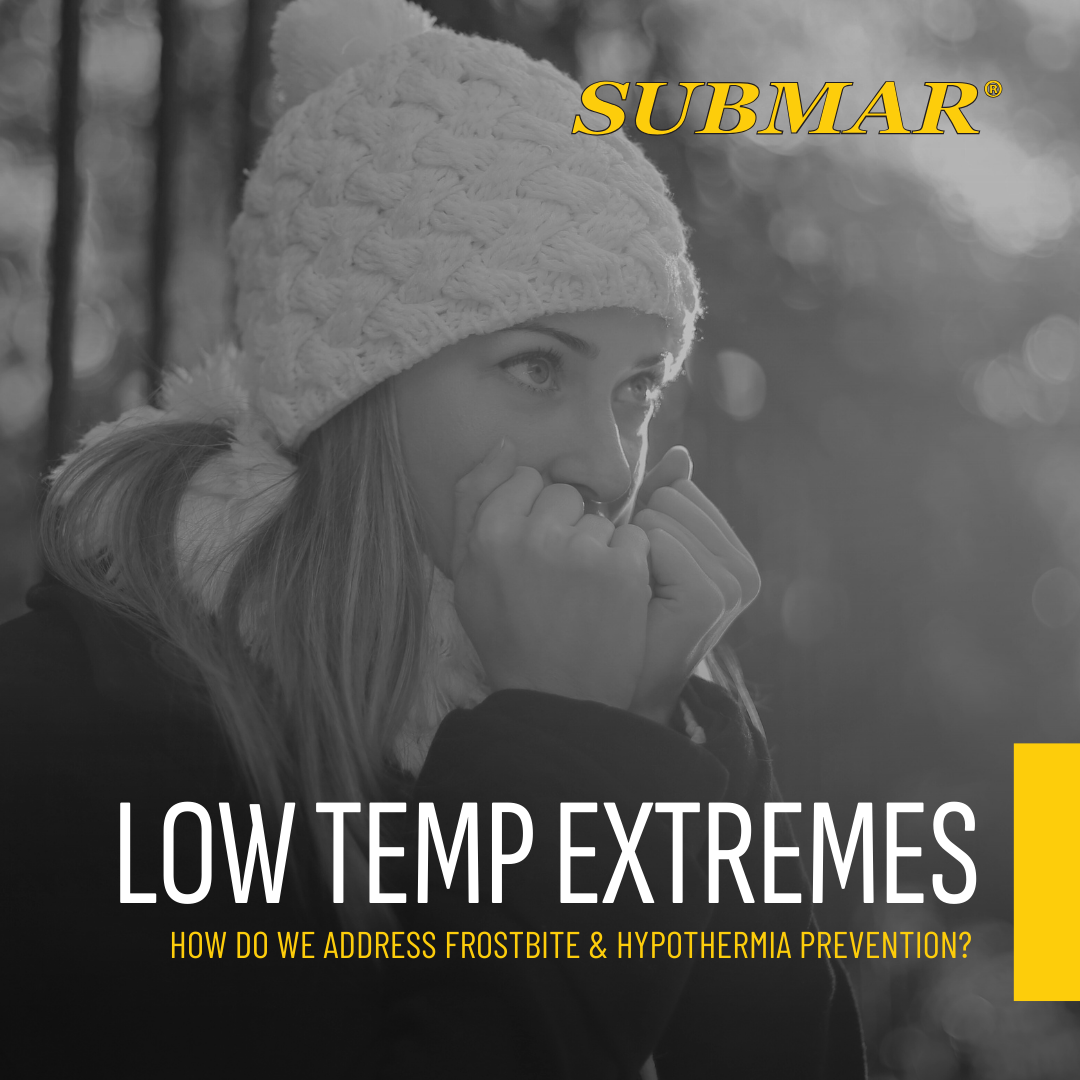
Stay Safe in the Cold: Protect Yourself from Frostbite and Hypothermia This Winter
Safety Topic: Frostbite and Hypothermia
December 2025 – Safety Topic – Frostbite and Hypothermia
Avoid Frostbite and Hypothermia
Cold weather can be dangerous for anyone who spends time outdoors for work or pleasure. Be mindful of the risks. Excessive exposure to low temperatures, wind or moisture can cause two dangerous conditions: frostbite and hypothermia.
Before venturing outside in winter, be sure to:
- Check the temperature and limit your time outdoors if it’s very cold, wet or windy.
- Bundle up in several layers of loose clothing
- Wear mittens rather than gloves
- Cover your head and ears with a warm hat
- Wear socks that will keep your feet warm and dry
Frostbite
Even skin that is protected can be subject to frostbite. It’s the most common injury resulting from exposure to severe cold, and it usually occurs on fingers, toes, nose, ears, cheeks and chin. If caught early, permanent damage can be prevented. If not, frostbite can lead to tissue death and amputation.
Superficial frostbite affects the skin surface while the underlying tissue remains soft. The skin appears white, waxy or grayish-yellow and is cold and numb. If the condition progresses to deep frostbite, all layers of the skin are affected and the outcome likely will be more serious. The skin will become completely numb, blisters may form and eventually the skin tissue dies and turns black.
If you suspect frostbite:
- Move the victim out of the cold and into a warm place
- Remove wet clothing and constricting items
- Protect between fingers and toes with dry gauze
- Seek medical attention as soon as possible
- Warm the frostbitten area in lukewarm water (99 to 104 degrees) for 20 to 30 minutes only if medical care will be delayed and if there is no danger of the skin refreezing
- Do not use chemical warmers directly on frostbitten tissue
- Protect and elevate the frostbitten area
Hypothermia occurs when the body’s core temperature drops below 95 degrees. Hypothermia is most associated with exposure to extreme cold, but it can also occur at higher temperatures if a person becomes chilled from being soaked with rain or submerged in water.
Severe shivering, one of the first signs of hypothermia, is beneficial in keeping the body warm. But as hypothermia progresses, shivering gives way to drowsiness or exhaustion, confusion, shallow breathing, irregular heartbeat, slurred speech, loss of coordination and, eventually, unconsciousness and death.
Paradoxical undressing is an extremely rare symptom of hypothermia; the victim undresses instead of bundling up. Researchers believe that in the final throes of hypothermia, victims may feel like they are overheating due to a rush of warm blood to the extremities.
If you encounter someone suffering from hypothermia:
- Check responsiveness and breathing, and call 911; except in mild cases, the victim needs immediate medical care
- Provide CPR if unresponsive and not breathing normally
- Quickly move the victim out of the cold
- Remove wet clothing.
- Warm the victim with blankets or warm clothing
- Only if the victim is far from medical care, use active rewarming by putting the victim near a heat source and putting warm (but not hot) water in containers against the skin
- Do not rub or massage the victim’s skin
- Be very gentle when handling the victim
- Give warm (not hot) drinks to an alert victim who can easily swallow, but do not give alcohol or caffeine.
These steps are not a substitute for proper medical care. Be sure to seek medical attention for frostbite and hypothermia as soon as possible.
Read Some More!

Embark on a career-defining journey with Submar as a Logistics Coordinator—where precision meets purpose. Join a team driving engineered solutions in erosion control and pipeline protection, and play a pivotal role in streamlining operations, optimizing supply chains, and delivering impactful results.
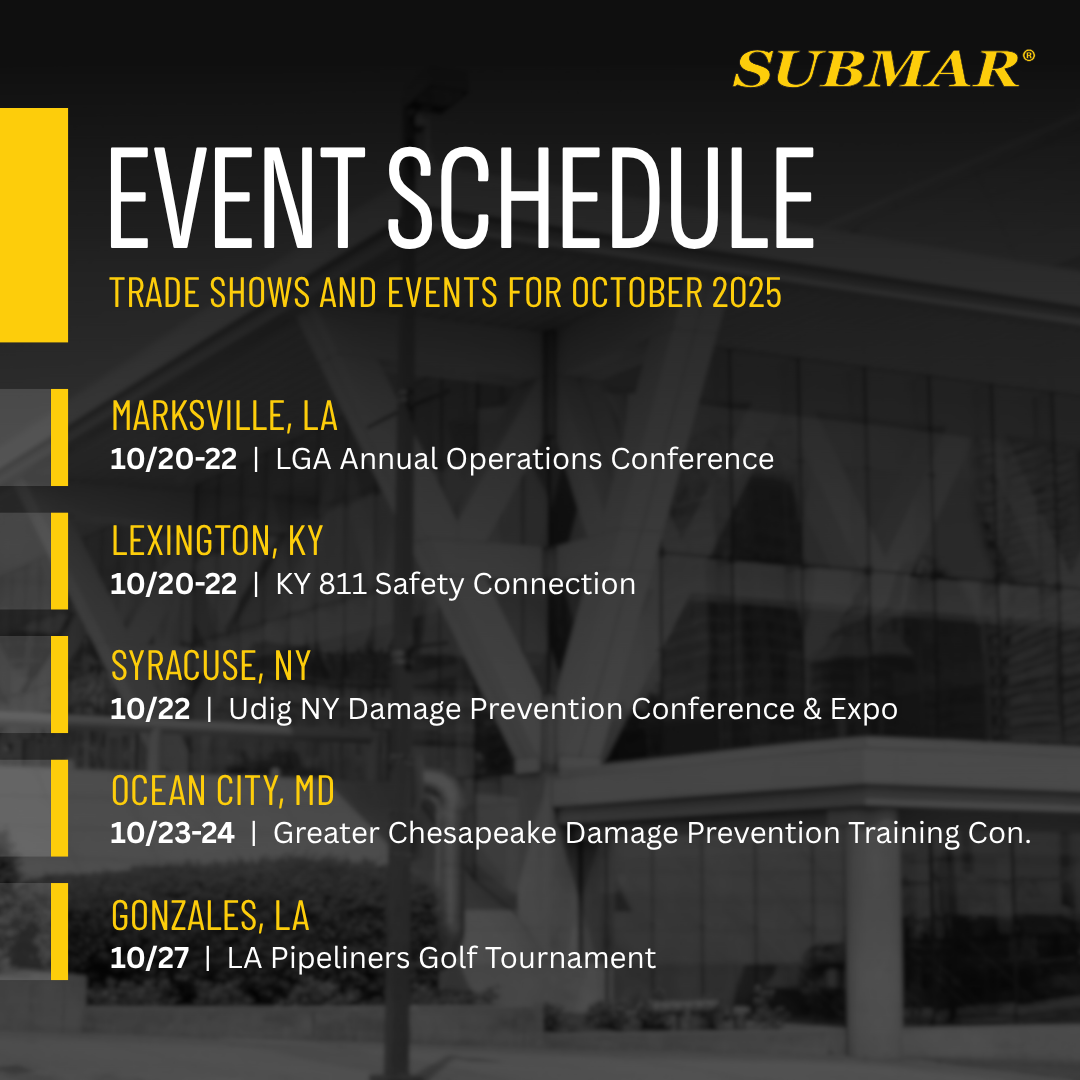
We wanted to let our partners and customers know where they can find us throughout the month of October as we market, network, and play golf for student scholarships!
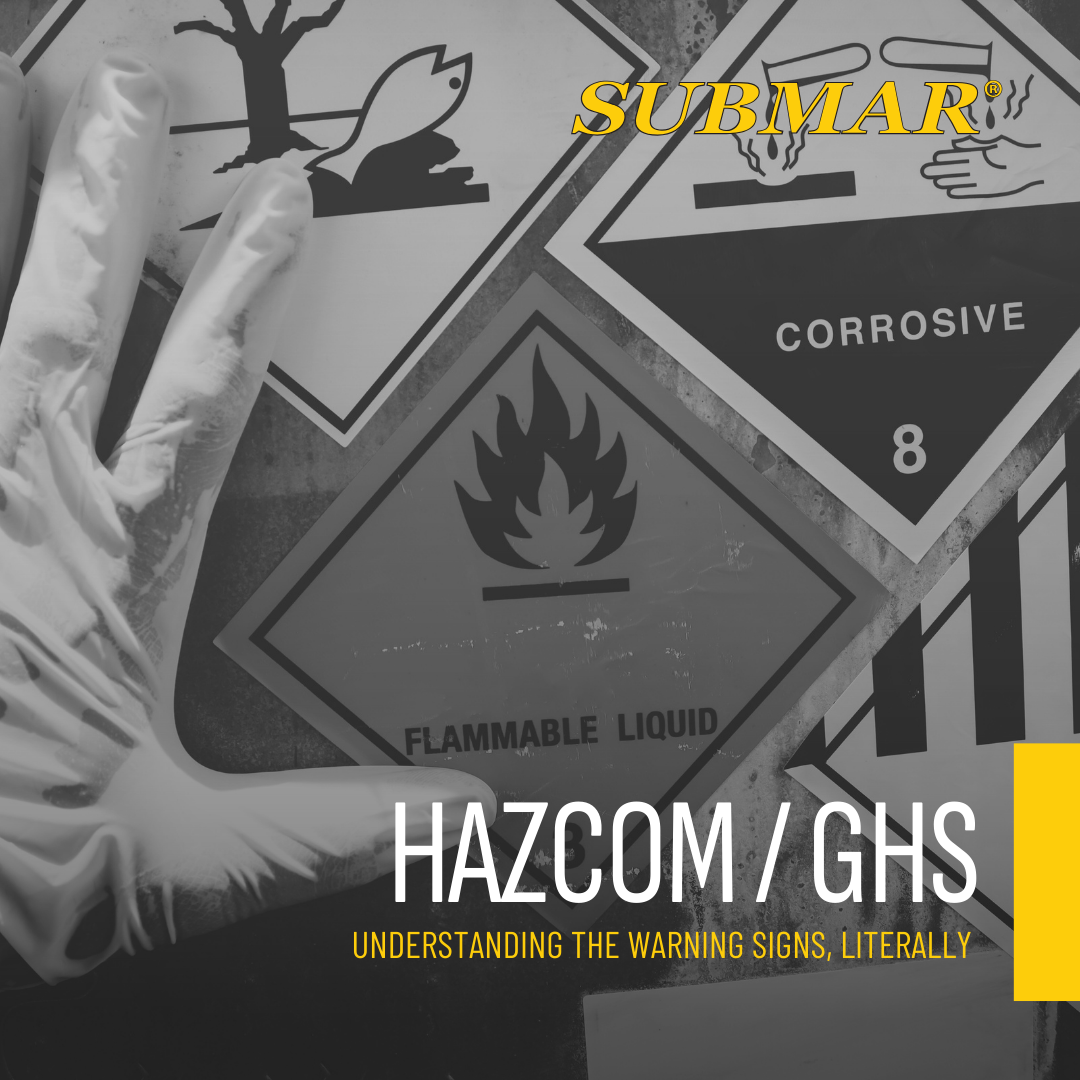
Staying safe starts with knowing what’s in front of you — HAZCOM and GHS ensure every chemical hazard is clearly identified and understood.