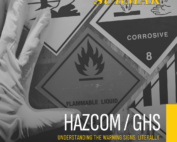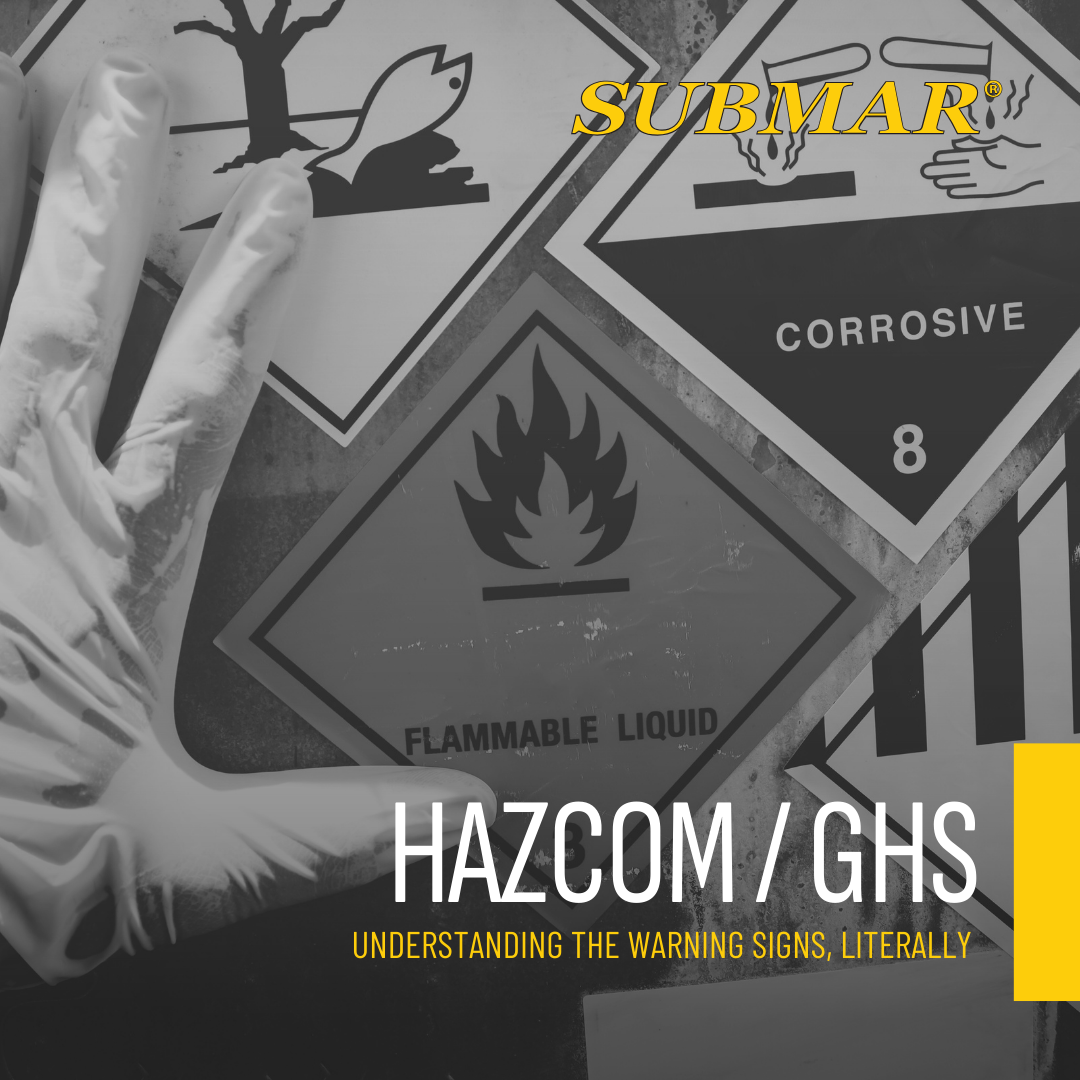
Staying safe starts with knowing what’s in front of you — HAZCOM and GHS ensure every chemical hazard is clearly identified and understood.
Safety Topic: HAZCOM/GHS
March 2026 – Safety Topic – HAZCOM/GHS
HAZCOM/Globally Harmonized System (GHS)
Under the Globally Harmonized System (GHS), there are nine pictograms used to identify chemical hazards. OSHA enforces the use of eight of these; the ninth (Environment) is considered non-mandatory in the U.S. because environmental protection falls under the EPA.
Health Hazard Pictograms
These symbols warn of substances that can cause internal damage or long-term health issues.
• Health Hazard (Silhouette with Star): Indicates chronic or long-term health risks, including carcinogens, mutagens, reproductive toxicity, respiratory sensitizers, and target organ toxicity.
• Exclamation Mark: Represents less severe but still hazardous effects, such as skin/eye irritation, skin sensitization, narcotic effects, and respiratory tract irritation.
• Skull and Crossbones: Indicates acute toxicity, meaning the substance can be fatal or toxic if inhaled, ingested, or absorbed through the skin in small amounts.
• Corrosion (Test tubes on hand/metal): Signals substances that cause severe skin burns, serious eye damage, or are corrosive to metals.Physical Hazard Pictograms
These symbols warn of immediate physical dangers like fires or explosions.
• Flame: Used for flammable gases, liquids, and solids. Under the 2024 OSHA updates, this also includes desensitized explosives.
• Flame Over Circle (Oxidizer): Identifies oxidizers that can cause or intensify fires and explosions by providing oxygen to a fuel source.
• Exploding Bomb: Marks highly unstable materials prone to explosions, including unstable explosives, certain self-reactives, and organic peroxides.
• Gas Cylinder: Indicates gases under pressure (compressed, liquefied, or dissolved) which may explode if heated or cause projectile hazards if the cylinder ruptures.Environmental Hazard Pictogram
• Environment (Dead fish and tree): Warns of aquatic toxicity and potential long-term damage to ecosystems. Note: This is the only pictogram not mandated by OSHA.It is important to note that the OSHA pictograms do not replace the diamond shaped labels that the U.S. Department of Transportation (DOT) requires for the transport of chemicals, including chemical drums, chemical totes, tanks or other containers.
Read Some More!
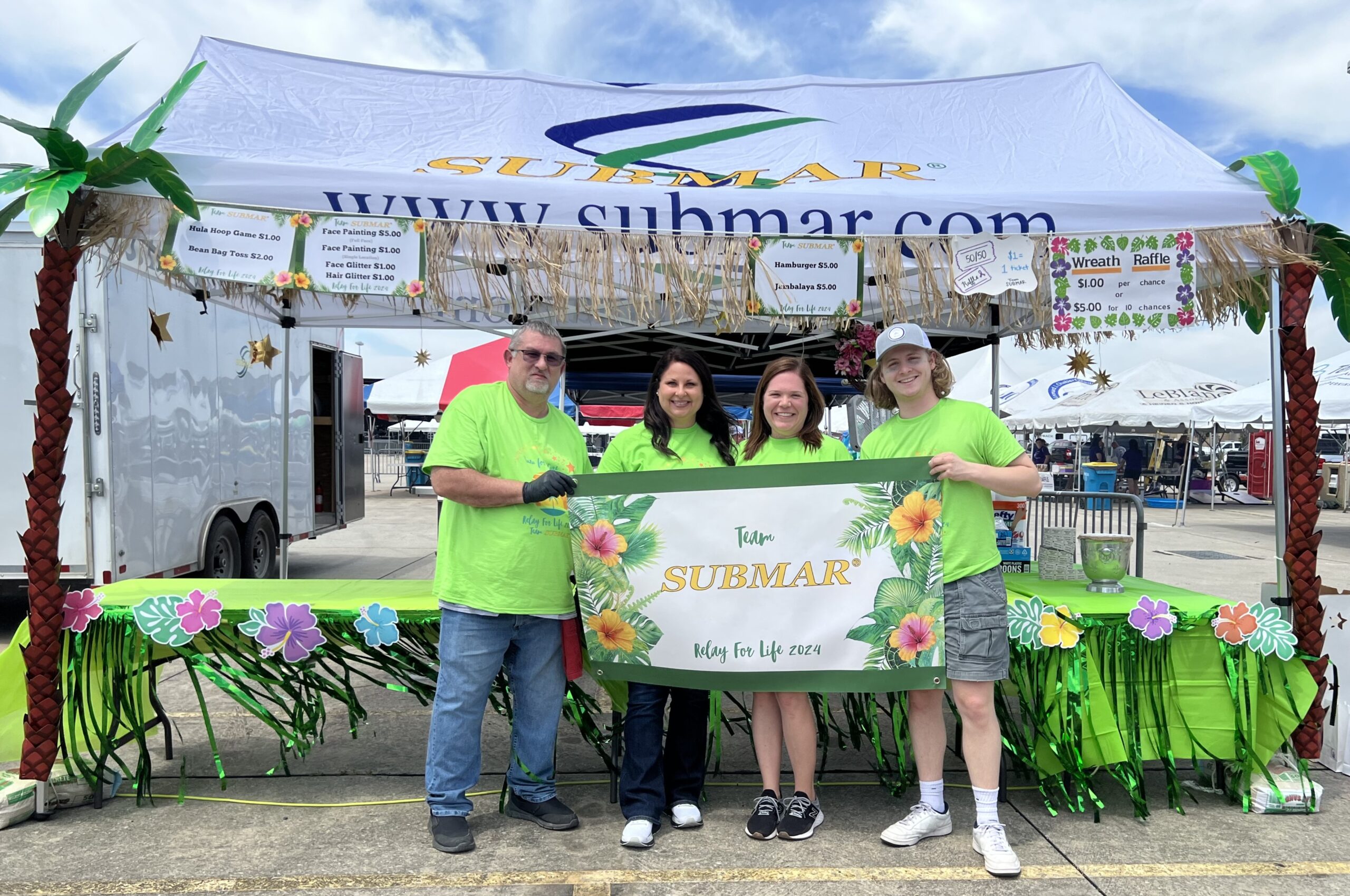
Team Submar had a great time participating in the Terrebonne Parish Relay for Life at the Barry P. Bonvillan Civic Center in Houma. The Submar team raised funds for the American Cancer Society at this event by selling jambalaya, hamburgers, and plate lunches.

Discover a career-defining opportunity with Submar, a leader in engineered solutions for erosion control and pipeline protection. This role offers the chance to lead innovative projects, drive impactful results, and shape the future of solutions.
Submar leads in custom pipeline erosion control solutions, offering extensive experience, a strong safety commitment, and turnkey project management, meeting diverse needs in both offshore and onshore settings.